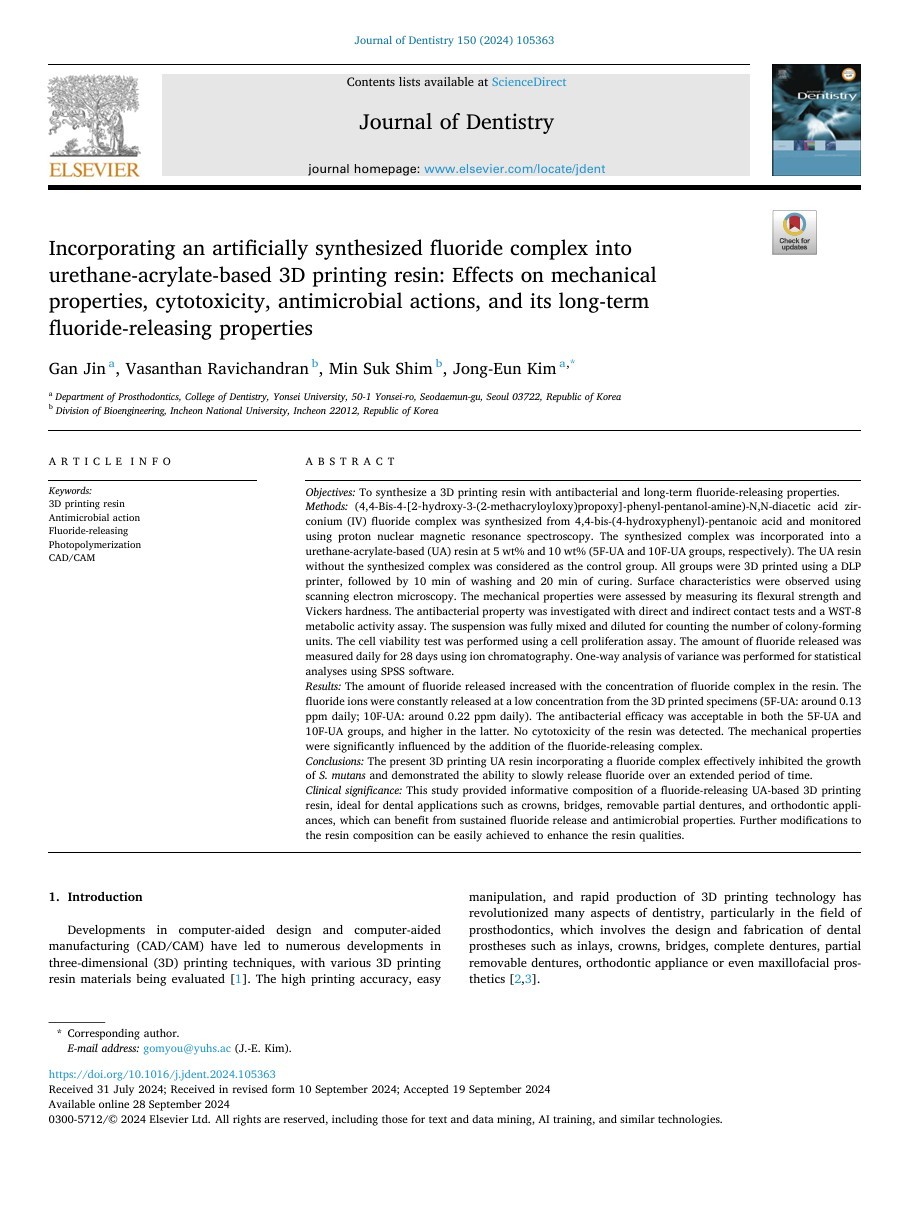
This study developed a novel urethane acrylate-based 3D printing resin incorporating a custom-synthesized zirconium (IV) fluoride complex designed to confer simultaneous antibacterial activity and sustained fluoride release. The complex was synthesized from 4,4-bis-(4-hydroxyphenyl)-pentanoic acid, characterized by ¹H NMR, and incorporated at 5 and 10 wt% into a DLP-printable resin matrix. Flexural strength, Vickers hardness, surface morphology, antibacterial efficacy against S. mutans, cytotoxicity, and daily fluoride release over 28 days were systematically evaluated. Results demonstrated concentration-dependent fluoride release at clinically relevant low levels, acceptable antibacterial performance, and no detectable cytotoxicity, though mechanical properties were significantly affected by complex addition. These findings establish a compositional foundation for multifunctional 3D-printed dental restorations — including crowns, bridges, and orthodontic appliances — capable of delivering long-term cariostatic and antimicrobial benefits.