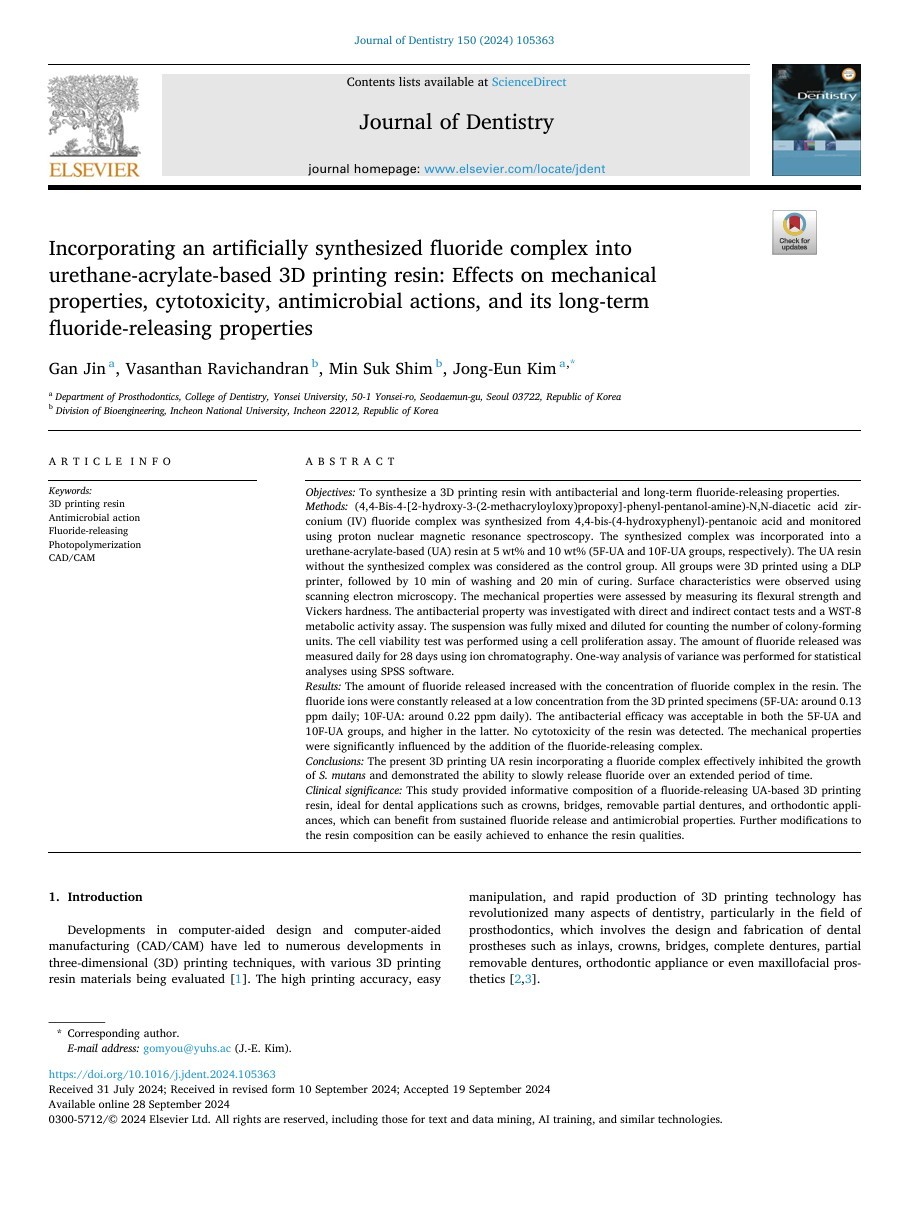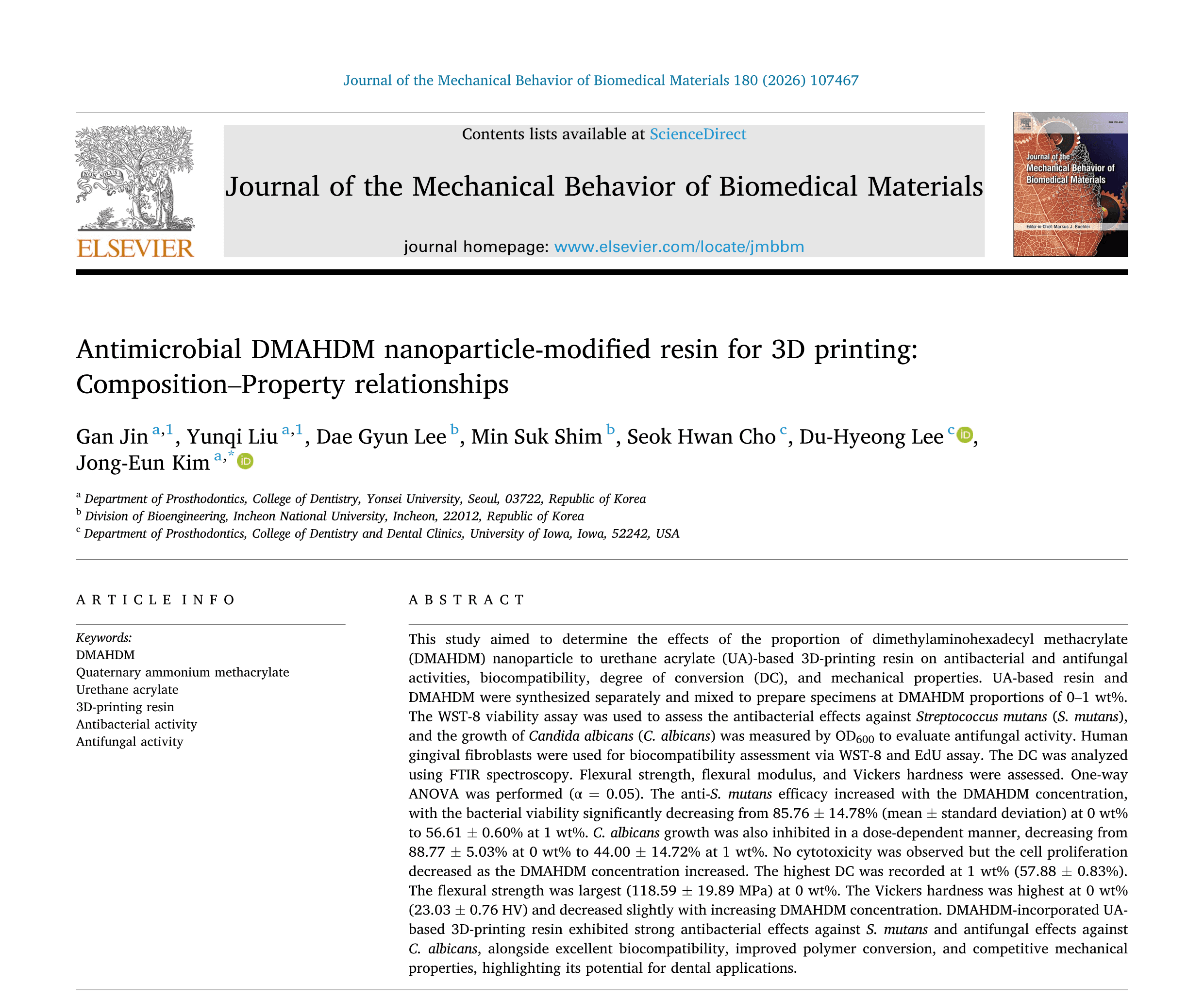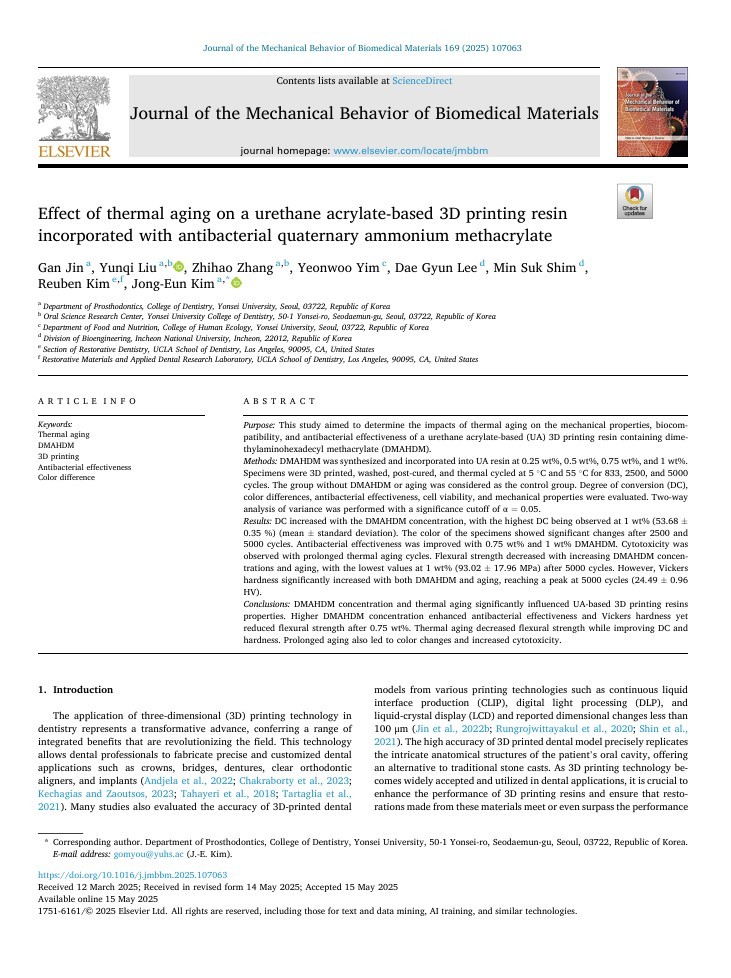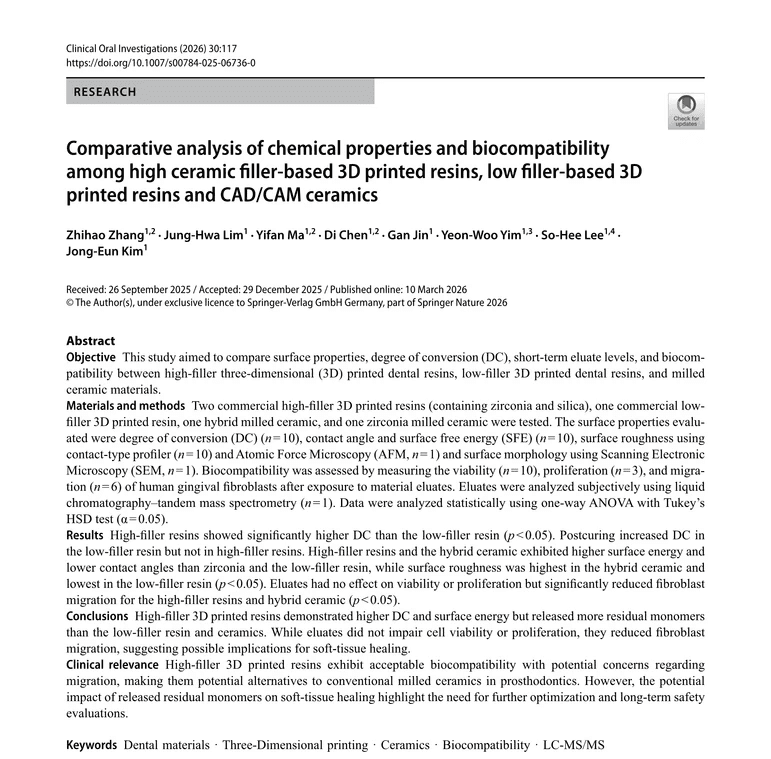
Objective: This study aimed to compare surface properties, degree of conversion (DC), short-term eluate levels, and biocompatibility between high-filler three-dimensional (3D) printed dental resins, low-filler 3D printed dental resins, and milled ceramic materials.
Materials and methods: Two commercial high-filler 3D printed resins (containing zirconia and silica), one commercial lowfiller
3D printed resin, one hybrid-milled ceramic, and one zirconia-milled ceramic were tested. The surface properties evaluated
were degree of conversion (DC) (n=10), contact angle and surface free energy (SFE) (n=10), surface roughness using
contact-type profiler (n=10) and Atomic Force Microscopy (AFM, n=1) and surface morphology using Scanning Electronic
Microscopy (SEM, n=1). Biocompatibility was assessed by measuring the viability (n=10), proliferation (n=3), and migration
(n=6) of human gingival fibroblasts after exposure to material eluates. Eluates were analyzed subjectively using liquid
chromatography–tandem mass spectrometry (n=1). Data were analyzed statistically using one-way ANOVA with Tukey’s
HSD test (α=0.05).
Results: High-filler resins showed significantly higher DC than the low-filler resin (p<0.05). Postcuring increased DC in
the low-filler resin but not in high-filler resins. High-filler resins and the hybrid ceramic exhibited higher surface energy and
lower contact angles than zirconia and the low-filler resin, while surface roughness was highest in the hybrid ceramic and
lowest in the low-filler resin (p<0.05). Eluates had no effect on viability or proliferation but significantly reduced fibroblast
migration for the high-filler resins and hybrid ceramic (p<0.05).
Conclusions: High-filler 3D printed resins demonstrated higher DC and surface energy but released more residual monomers
than the low-filler resin and ceramics. While eluates did not impair cell viability or proliferation, they reduced fibroblast
migration, suggesting possible implications for soft-tissue healing.
Clinical relevance: High-filler 3D printed resins exhibit acceptable biocompatibility with potential concerns regarding
migration, making them potential alternatives to conventional milled ceramics in prosthodontics. However, the potential
impact of released residual monomers on soft-tissue healing highlight the need for further optimization and long-term safety
evaluations.